
Welcome to 'Nothing Gold'
in which I give a mission statement of sorts

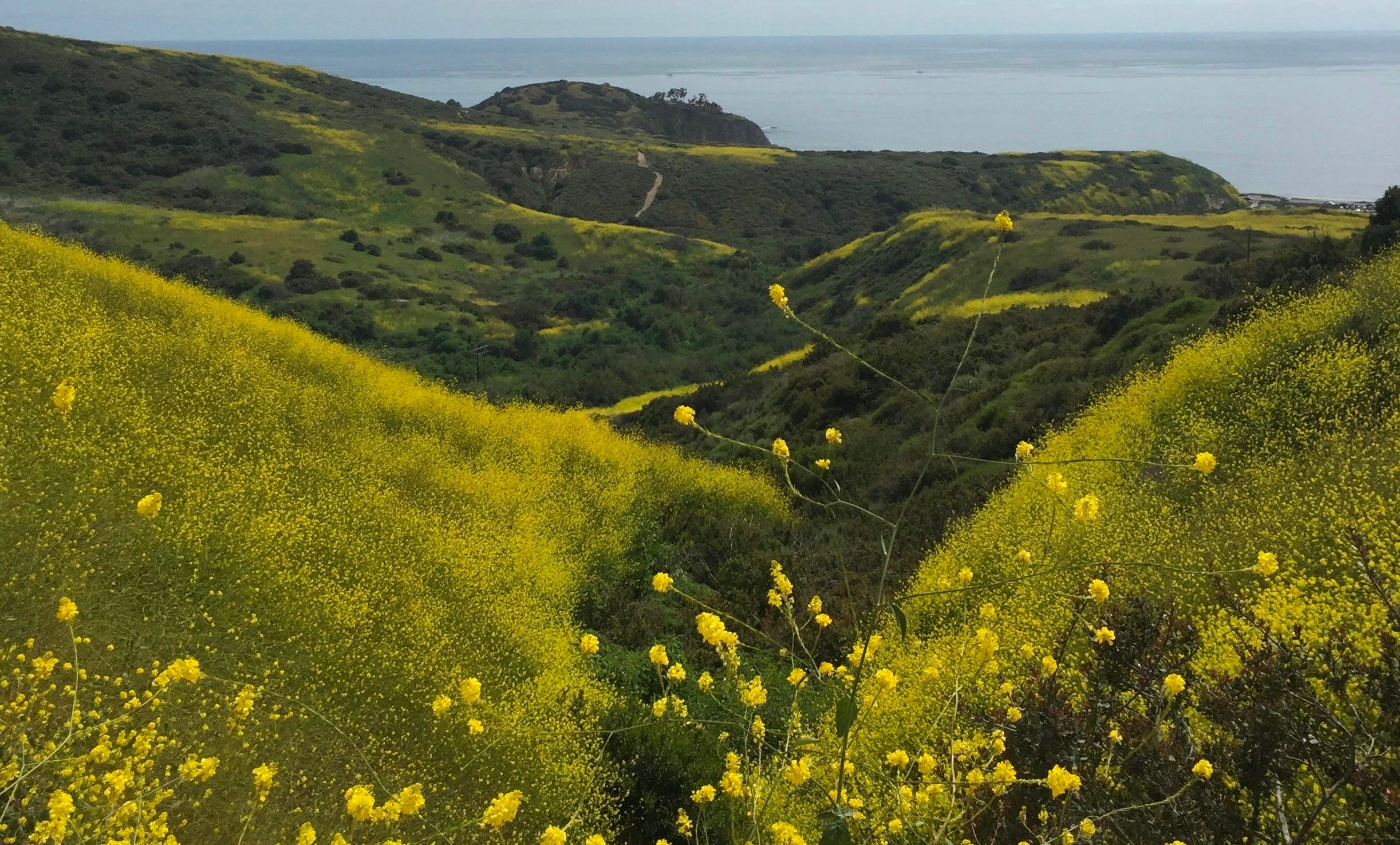
One of the first (and, if I’m being totally honest, only) poems I memorized was Robert Frost’s “Nothing Gold Can Stay.” I first learned it close to 30 years ago, and while I sometimes stumble over the exact wording of the third and fourth lines, I remember the rest perfectly:
Nature’s first green is gold,
Her hardest hue to hold.
Her early leaf’s a flower;
But only so an hour.
Then leaf subsides to leaf.
So Eden sank to grief,
So dawn goes down to day.1
Nothing gold can stay.
I remember being confused by the opening line. Before encountering this poem, I was oblivious to the idea (the reality) that in nature trees and plants often begin to come back in the spring in a burst of golden color before settling in to the familiar greens of spring and summer. But after reading it, I began to notice that there really are some buds that have a sheen that just might be golden, if looked at in the right light, before unfurling into the standard green—a blink and you’ll miss it moment of beauty. And now, every spring, when the forsythia bloom in a shower of gold that lasts far longer than a blink at the edge of our property, I think of this opening line. The poem, memorized and thus embedded in my consciousness, helped (helps) me to be more aware.
But of course Frost’s point is not simply about paying attention to the changing of the seasons (though this is part of his point, I think). The poem is (also) about the Fall; the inability of the golden age to last. This acknowledgment of the passage of time, the inevitable waning that we all endure, is not a pure lament, though. Frost reminds us that nothing gold can stay while also drawing our attention to the presence of the gold that we might have otherwise missed.
This is what I hope to do with this substack. I think the next year—the next four years—are going to be, on the whole, deeply unpleasant. And so I want to write through it. To be conscious and deliberate about noting when these fleeting golden hues appear, and also when they fade. At least once a week, though I hope more frequently, I will sit down to write about the things that catch my attention, that remind me that all things pass, that glory and beauty are fleeting, but so are suffering and pain. I want to be awake and mindful of both.
So I will write about things I read, and watch, and listen to; things I see on the long walks in the woods by my house and, probably, about the travails of the sports teams I love. I know that if I were to draw a Venn diagram with big circles for literature and sports and spirituality, with myself in the overlapped spot in the middle, not many folks would join me there.2 But my hope is that in any given post readers will find something that helps them be more alert to the brief emergence of the gold in their lives as well. Frost’s poem manages to do so much in 8 short lines; I hope to model myself on his brevity. In that spirit, I’ll end here, with an invitation: take a moment to reread Frost’s poem, and perhaps commit it to memory. It truly won’t take long, and doing so would be time well spent.
I love how surprising this line is; it scans so purely we don’t immediately note how radical it is. Dawn goes down to day? We might expect day fading to night to be the governing image here, but instead we get the bright blast of sunrise, and all the glorious possibilities it presents, fading into the normal light of another average day (akin to the green of a normal leaf—certainly not bad, but not wondrous, either). So the poem is not just about the Fall, or the passage of time, but about the movement from shocking wonder to mundane reality.
Though I do hope the comment section here will bring together these disparate groups, and some day down the line readers of the Jesuit Media Lab will interact with David Foster Wallace Society people, and we will discover surprising overlaps between, say, fans of Notre Dame football, George Saunders readers, and the Green Brothers’ nerdfighteria community. That’s the ultimate dream anyway :)
Mike- I’m excited to read what you have to write in the weeks/years ahead. Your post reminds me of a feeling i had at some point during the COVID lockdown. I had this sense that as time passes it will surely be remembered as hard/terrible etc.. but in that moment I was seeing the little gold in the time we spent together as a family and the family book club we had created. I made a note in my notes app to help me remember that feeling since i thought with time it might be washed away in my memory by the bigger waves of the pandemic.
Looking forward to what you write!
I keep turning over in my head how you start this reflection by mentioning memorizing poems. And how I don’t think I have a single entire poem memorized. Maybe a really short shel Silverstein (hug of war?) is in there somewhere. Some scripture. But what I mostly have memorized is 1) every song my parents or aunts or uncles sang at bedtime or campfires, 2) 1980s-90s hymnody, 3) all of my dialogue from shows I was in [redacted] years ago, and 4) entire children’s books. ‘I am a bunny. My name is Nicholas and I live in a hollow tree...’ Apparently I have to recite/sing something umpteen times for it to stick.